The short version
We switched on automated posting for a D2C craft brand, two posts a day on Facebook and Instagram. On Facebook, views rose 990% to 2,332 and the page gained 153 followers, more than doubling it. On Instagram, 90.5% of the 725 views came from people who already followed us. Automation is a good way to keep a page active and can grow a small Facebook page. On its own it won't find you new people on Instagram.
The brand
The brand is a direct-to-consumer craft business that sells through its own website. Its website has a big audience. Its Facebook page didn’t: it had fewer than 100 followers and almost no activity at the start of October.
That made it a fair test. We wanted to know what our automated posting workflow, the one behind our $49 Social Starter plan, does for a page that has gone quiet.
The starting point
Before 13 October, the page was close to silent. Facebook shows fewer than 25 views a day and no engagement at all for the first ten days of the month.
We’d heard what many small brands say: “Meta doesn’t like automated posts.” Meta says the opposite. Instagram’s head, Adam Mosseri, has said more than once that scheduled posts neither gain nor lose reach. We wanted our own numbers.
What we did
From 13 October we published two posts a day on Facebook and on Instagram, about 34 posts on each platform by 29 October. Every post came out of our automated workflow, built from the brand’s own craft photos and tutorials. Most were image posts. A few were short videos and Reels.
We didn’t run any ads or boost any posts during the test, so every view and follower here came from the platforms’ own distribution. Two a day is far more than Social Starter’s four posts a week. We pushed the volume on purpose, to see clearly how each platform treats automated posts.
What happened on Facebook
Views went from almost nothing to 2,332
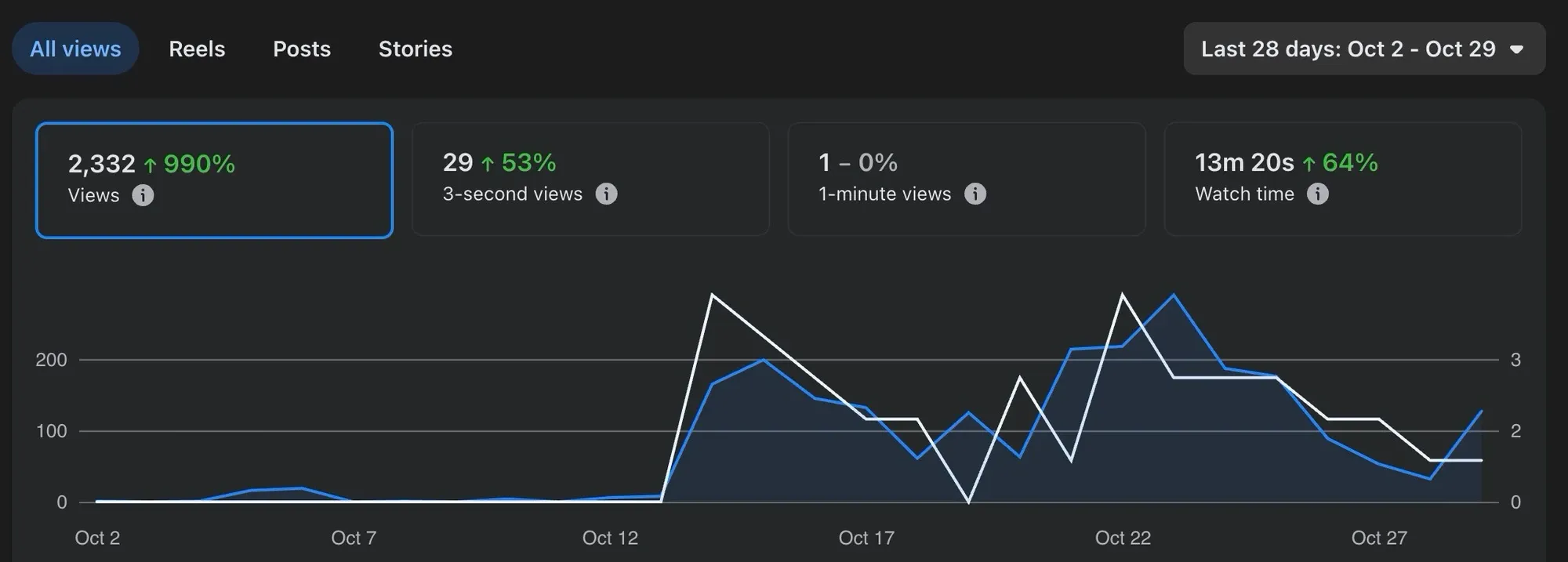
Views rose 990% on the previous 28 days. The jump starts the day the automation did, and daily views stayed between about 30 and 290 for the rest of the month.
The video numbers tell a different story. Across the month there were 29 three-second video views and a single one-minute view. People scrolled past our automated videos. The views came from the image posts.
People reacted, but they didn’t talk to us
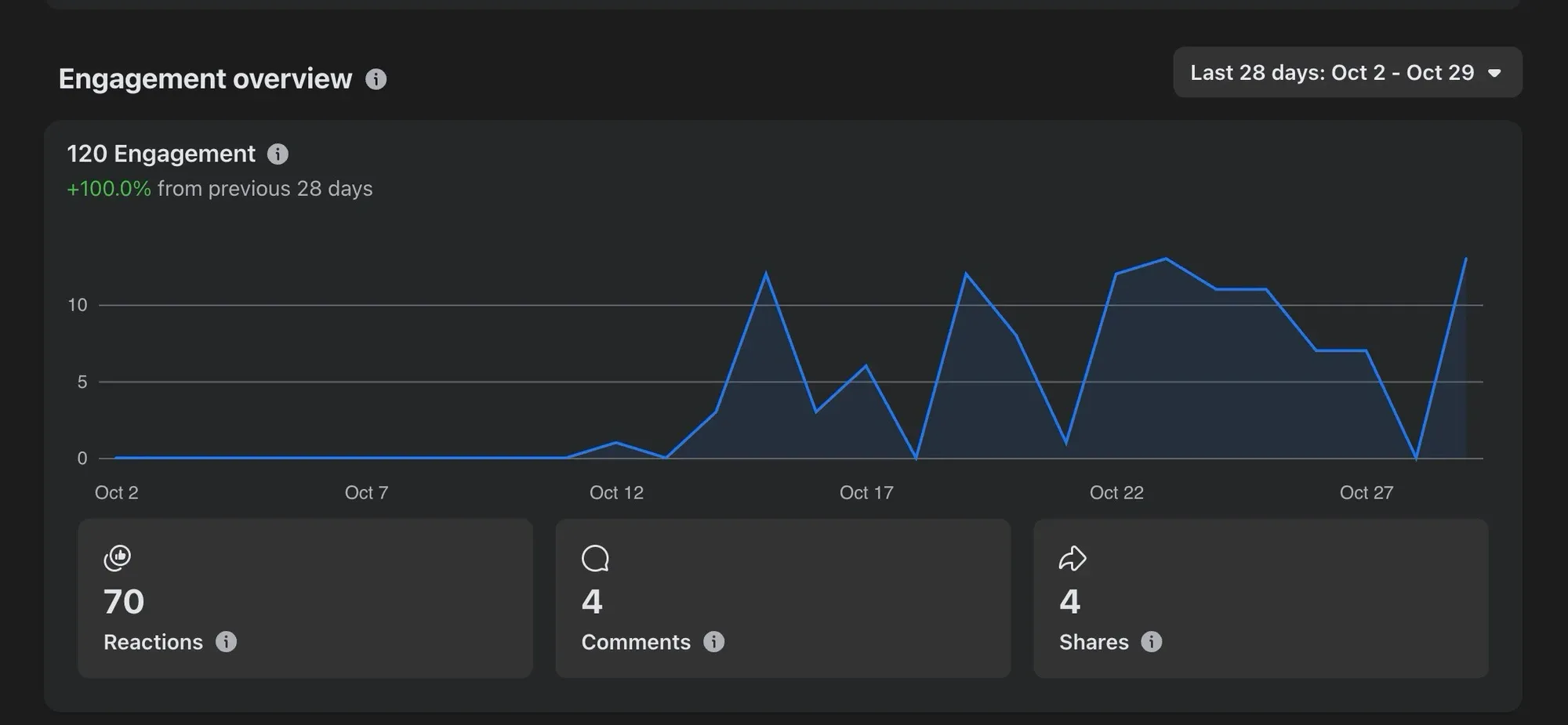
Engagement went from nothing to 120 in the month, including 70 reactions, 4 comments and 4 shares. That’s lower than we expected for 2,332 views. People liked the posts but rarely commented or shared, which is what you’d expect from posts nobody is replying to or starting a conversation around.
The page more than doubled
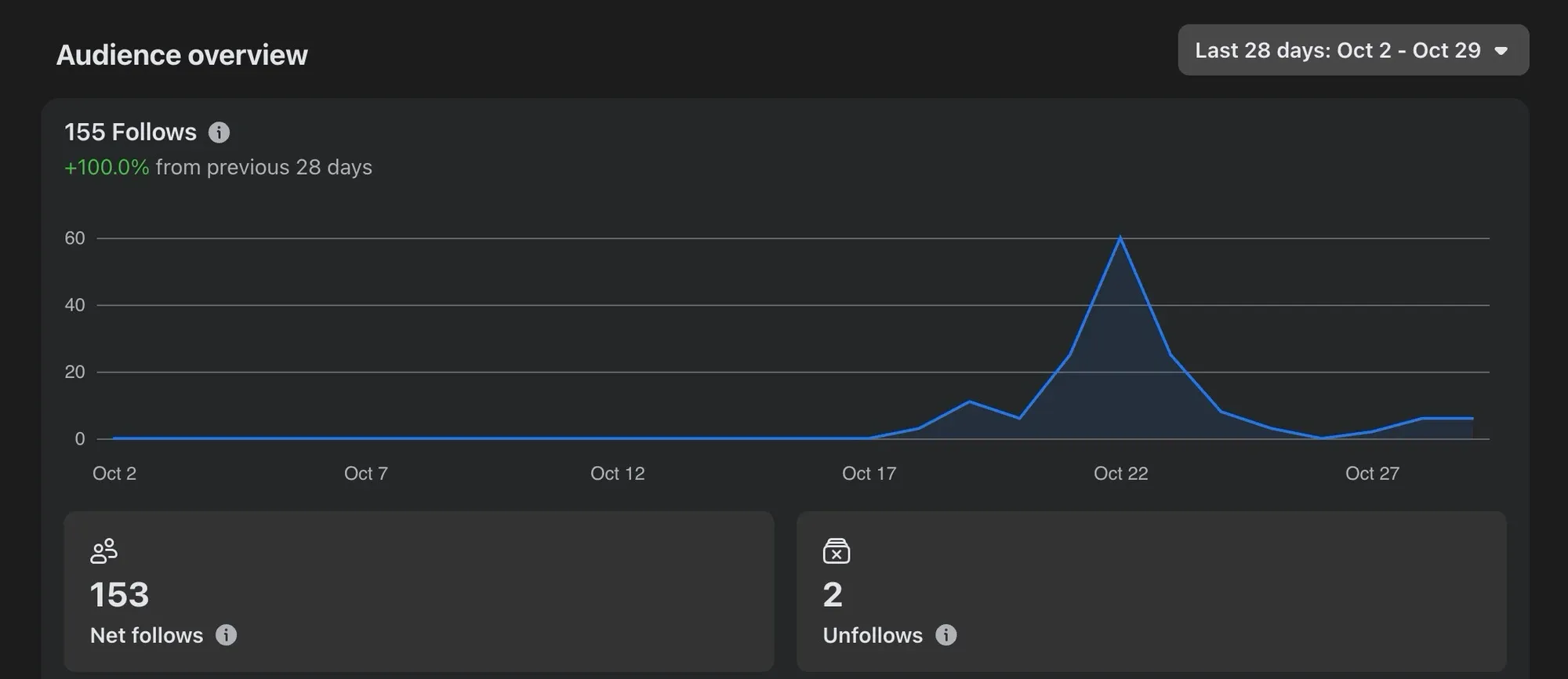
This was the result that surprised us. The page gained 155 followers and lost 2, a net gain of 153 on a page that had fewer than 100. New follows started around 18 October and peaked at about 60 on 22 October, during the busiest run of views.
What happened on Instagram
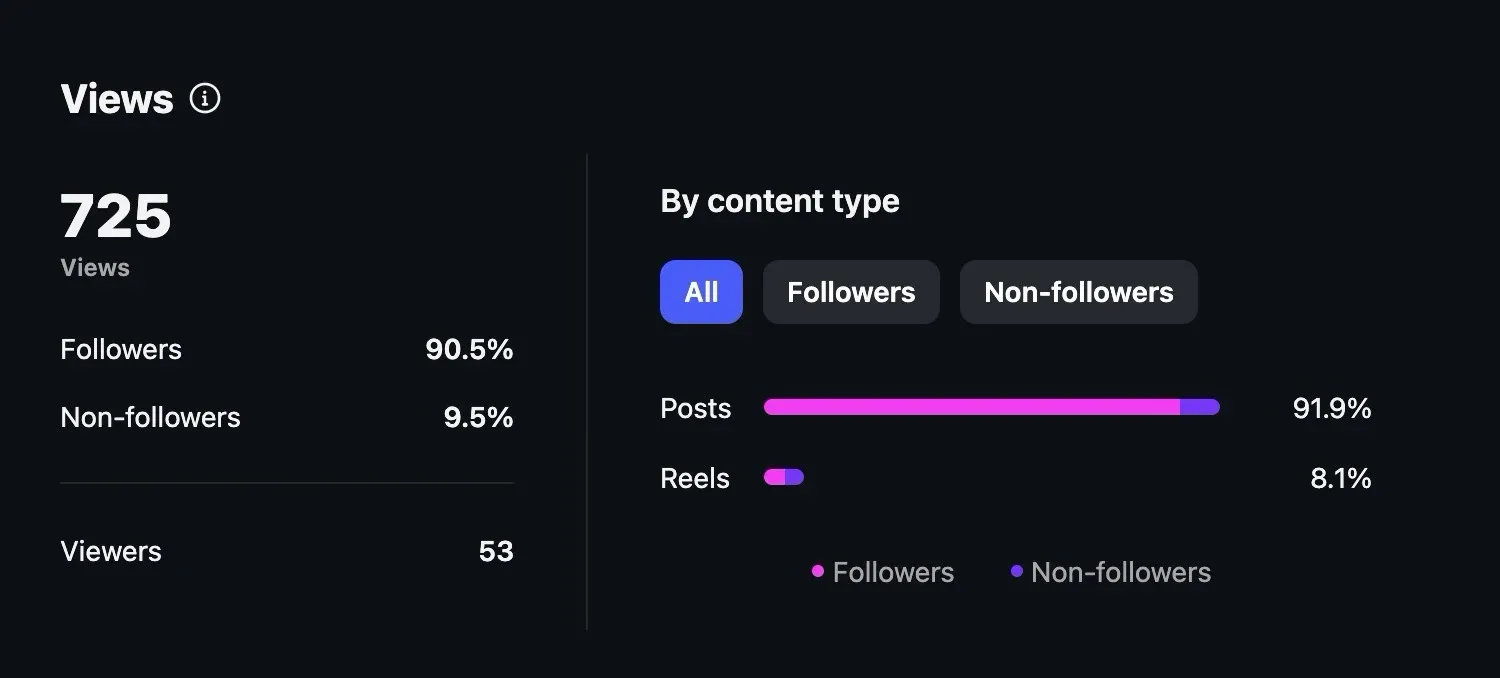
Instagram showed the same posts to far fewer people. There were 725 views from just 53 accounts, so the same small group saw post after post. 90.5% of views came from people who already followed us. Only about 69 views reached anyone new.
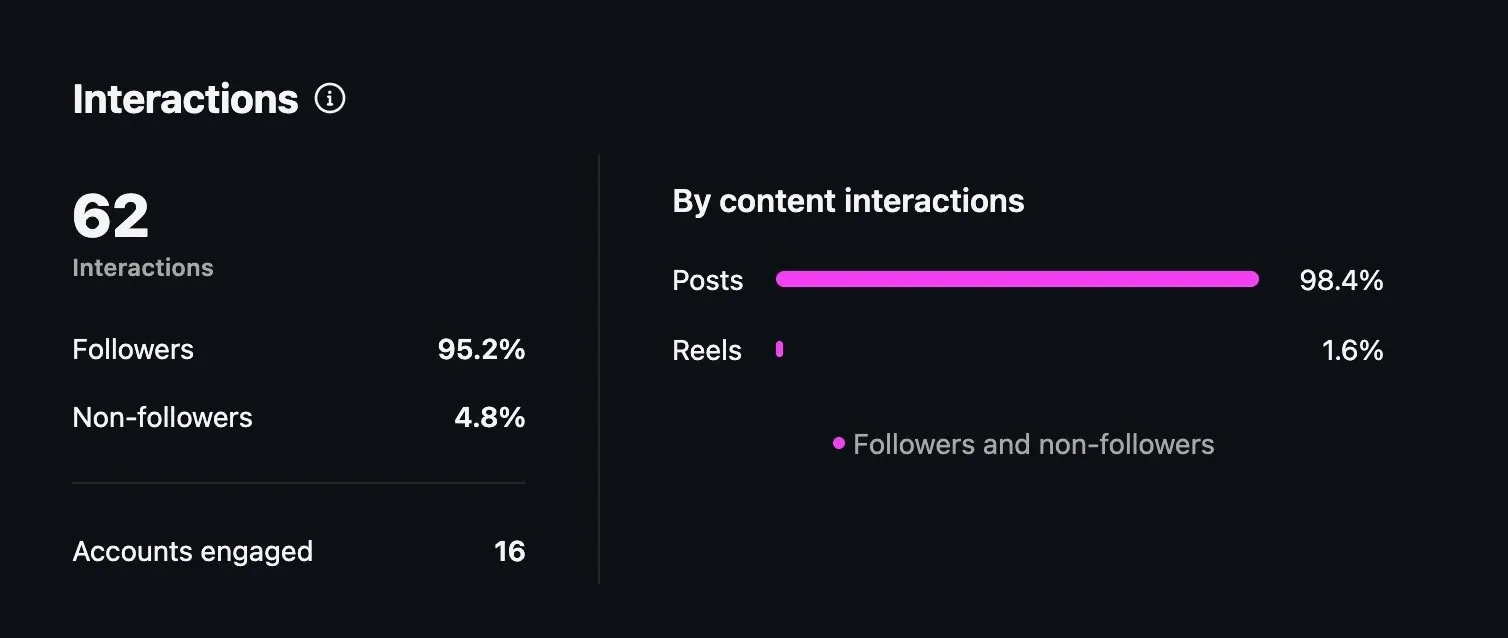
Interactions followed the same pattern: 62 in total, from 16 accounts, and 95.2% of them from existing followers. That’s about three interactions from people who didn’t already know us.
Why the two platforms behaved so differently
We don’t think Meta is quietly punishing automation. If it were, Facebook wouldn’t have spread the same posts to thousands of views. Here’s our read of the numbers:
- Facebook recommends posts from pages people don’t follow. Meta has been adding more of these recommended posts to feeds since 2022. A small page with steady, likeable posts can travel well beyond its followers, and ours did.
- Instagram finds new people mainly through Reels and Explore. Mosseri has said reach to non-followers depends on signals like watch time and how often a post is sent to friends. Our posts were mostly photos, and Instagram showed photos almost entirely to followers.
- Automated videos didn’t hold attention. One one-minute view on Facebook and Reels at 1.6% of Instagram interactions tell us that video made without a person shaping it doesn’t do the job video needs to do.
- Nobody was in the comments. Automation posts. It doesn’t reply, ask questions or start conversations, and comments are what keep a post being shown.
This is one account over 17 days with no control group, so treat it as a strong pattern rather than proof. We’ll keep tracking it.
What this means if you choose Social Starter
Social Starter ($49 a month) uses this workflow to post four times a week on Facebook and Instagram, made from your own product photos. Based on this test, here’s what we’d tell any brand before they choose it:
- Your pages will look active. That’s the job it’s built for. When a shopper checks your Instagram or Facebook before buying, they see a brand that’s open and making things.
- Facebook may bring some new followers, especially if your page is small. We can’t promise it, and at four posts a week the numbers will be smaller than ours.
- Instagram will mostly show your posts to people who already follow you. Don’t choose Social Starter to grow your Instagram audience.
- Replying to comments yourself makes a difference. A few minutes a week answering people turns reactions into conversations.
If you want to reach new people on Instagram
Reaching non-followers takes the things automation can’t do well yet. Reels made to be watched to the end and sent to a friend. Posts that answer a question someone would save. A person replying in the comments. That’s what Social Growth ($199 a month) is for, along with 200 Pinterest pins a month that keep sending people to your store long after they’re posted.
The honest summary: automation keeps your pages active, and that matters, because a page with no posts since spring makes shoppers wonder whether you’re still open. Growing an audience takes more than that.
Common questions
Does Meta penalize posts made with a scheduler or automation tool?
Meta says no. Instagram's head, Adam Mosseri, has said several times that scheduled posts don't lose reach. Our numbers fit that: Facebook spread our automated posts widely. What decides reach is how people respond to a post, and on Instagram, which formats get recommended to non-followers.
Why did Facebook reach new people when Instagram didn't?
Facebook mixes recommended posts from pages people don't follow into their feeds, so a small page's posts can travel. On Instagram, reach beyond your followers comes mostly through Reels, Explore and posts that get watched, shared and sent. Our automated posts were mostly photos, and those stayed with followers.
Will the $49 Social Starter plan grow my Instagram following?
Probably not by much, and we say so on the plan. It keeps your pages active so shoppers can see you're open. Social Growth ($199) is built for reaching new people, with Pinterest and Reels made for discovery.
How many posts does Social Starter publish?
Four a week on Facebook and Instagram. This test ran two a day, a much heavier schedule than the plan, so a Social Starter account should expect smaller numbers than these.
Sources
Written by Omar Sohrab with AI assistance. Every figure comes from Meta's own insights screenshots for the brand's accounts, shown in full on this page.

Omar Sohrab
Omar works across content strategy, search and technical operations. He connects useful publishing with the systems that help people discover it.
Author profile ↗CHOOSE WITH YOUR EYES OPEN
Keep your pages active, or grow them.
Social Starter ($49 a month) keeps Facebook and Instagram active with four posts a week. Social Growth ($199 a month) is built to reach new people, with Pinterest and Reels. We’ll help you pick the one that fits.
Compare the social plans ↗